The role of Nad+
A deep dive into NAD+
james
2/23/20264 min read
The understanding of the molecular and cellular basis of aging has grown exponentially over recent years, and it is now accepted within the scientific community that aging is a malleable process; just as it can be accelerated, it can also be slowed and even reversed. This has far-reaching implications for our attitude and approach toward aging, presenting the opportunity to enter a new era of cellular regenerative medicine to not only manage the external signs of aging but also to develop therapies that support the body to repair and restore itself back to a state of internal well-being. A wealth of evidence now demonstrates that a decline in cellular nicotinamide adenine dinucleotide (NAD+) is a feature of aging and may play a role in the process. NAD+ plays a pivotal role in cellular metabolism and is a co-substrate for enzymes that play key roles in pathways that modify aging. Thus, interventions that increase NAD+ may slow aspects of the aging trajectory, and there is great interest in methods for cellular NAD+ restoration. Given these recent advancements in understanding the cellular aging process, it is important that there is an integration between the basic scientists who are investigating the underlying mechanisms of cellular aging and the surgeons and aesthetic practitioners who are providing antiaging therapies. This will allow the effective translation of this vastly complex area of biology into clinical practice so that people can continue to not only stay looking younger for longer but also experience improved health and wellness.
In general terms, aging is considered the organism-wide loss of homeostasis, innate repair, and regenerative capacity, resulting in an accumulation of damage and the development of multiple copathologies. Aging is a complex and multifactorial phenomenon that includes many effects at the systemic level which are ultimately driven by critical changes at the cellular level. It is recognized that there are nine key cellular changes that underpin the cascade of events that lead to systemic age-related decline. These cellular causes of aging have been well characterized and are collectively referred to within the aging research community as the “hallmarks of aging.”
The identification of the hallmarks of aging has marked a shift toward understanding aging not as a single process, but instead as a combination of multiple cellular changes. This has allowed the molecular and cellular root causes of many common aging phenotypes to be identified. For example, skin aging—arguably the most recognizable sign of aging—has traditionally been described at the histological level, but it is now understood that these changes result from more specific failures at a cellular level, revealing new therapeutic targets with the potential to address aging at its root cause (Fig. 1).
Traditionally, age-related dysfunction has been described at the histological level, but it is now known that these changes result from more specific failures at the cellular level. These key cellular changes are collectively known as the “hallmarks of aging,” and designing interventions that target these hallmarks is currently an area of intense research.
NAD+ AS A TARGET FOR CELLULAR AGING
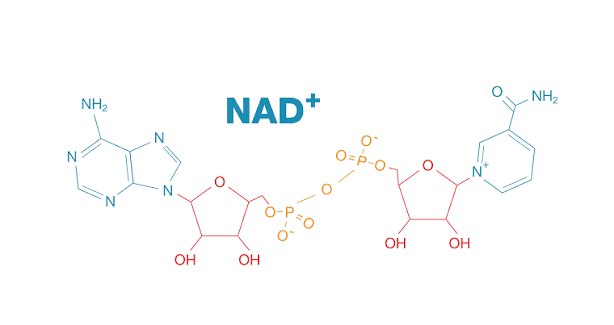
One area of intense research within the field of cellular aging surrounds the molecule nicotinamide adenine dinucleotide (NAD+). Metabolomics-based studies of aging have identified NAD+ as a central metabolic intermediate linked to many of the hallmarks of aging. NAD+ is a cellular coenzyme that plays an essential role in both metabolic and signaling reactions. During its role in metabolism, NAD+ participates in redox reactions leading to the formation of ATP. Aside from this key role, NAD+ is also a critical regulator of a wide array of enzymes involved in making posttranslational modifications to proteins that change their activity. This combination of metabolic and cell-signaling functions means that NAD+ acts as a metabolic messenger providing an important link between the energy status of the cell and downstream signaling for appropriate cellular adaptation to bioenergetic stress. Therefore, proper maintenance of NAD+ levels is required to sustain tissue homeostasis and stress response.
Despite its critical role, an age-dependent decrease of cellular NAD+ is observed across species. In humans, age-related NAD+ decline has been observed in the liver, skin, brain, plasma, skeletal muscle, and monocyte-derived macrophages. Chronically low NAD+ has been observed in accelerated aging disorders and age-related disease states and has been linked to multiple hallmarks of aging.
Low NAD+ contributes to aging because NAD+ serves as an exclusive co-substrate for two key families of enzymes that affect cellular repair and longevity—the sirtuins (SIRTs) and the poly(ADP-ribose) polymerases (PARPs). These enzyme families regulate many signaling processes associated with cellular health and longevity and are directly dependent on NAD+ availability to perform their functions.
PRECLINICAL BENEFITS OF NAD+ RESTORATION
Restoration of NAD+ in vivo has been investigated extensively and has demonstrated whole-body benefits. In mice, NAD+ levels have been found to decrease twofold by mid-age, correlating with the onset of multiple age-related issues. Successful restoration of NAD+ to youthful levels resulted in cardiovascular improvements and the reversal of multiple metabolic conditions. Improvements to muscle function and endurance were also observed, together with increased mitochondrial function, ATP production, and an increased number and quality of muscle stem cells. An increased capacity for organ protection and regeneration after injury was found in the liver, heart, and kidneys, and NAD+ restoration was also found to rescue vision by reversing retinal degeneration. Significant neurological benefits have also been demonstrated in Alzheimer disease animal models following NAD+ restoration, including improved cognition and nerve regeneration. NAD+ availability also appears to impact fertility, as strategies to boost NAD+ levels were found to improve oocyte quality and restore fertility in aged mice.
CLINICAL BENEFITS OF NAD+ RESTORATION
These impressive preclinical results have now shifted the focus to human clinical trials with the hope of translating the benefits of NAD+ restoration to humans. Notable observations so far include a trend toward improvement in indicators of cardiovascular function, including lower systolic blood pressure and reduced aortic stiffness, a promising reduction in the levels of circulating inflammatory cytokines in older males after only 3 weeks of NAD+ restoration, and an NAD+-associated increase in mitochondrial function with decreased proinflammatory factors in patients with heart failure. The diverse protective and regenerative capacity of NAD+ has been attributed to its involvement in the prevention of multiple hallmarks of cellular aging.