The wolverine stack
A look into how these peptides work together
James
2/23/20263 min read
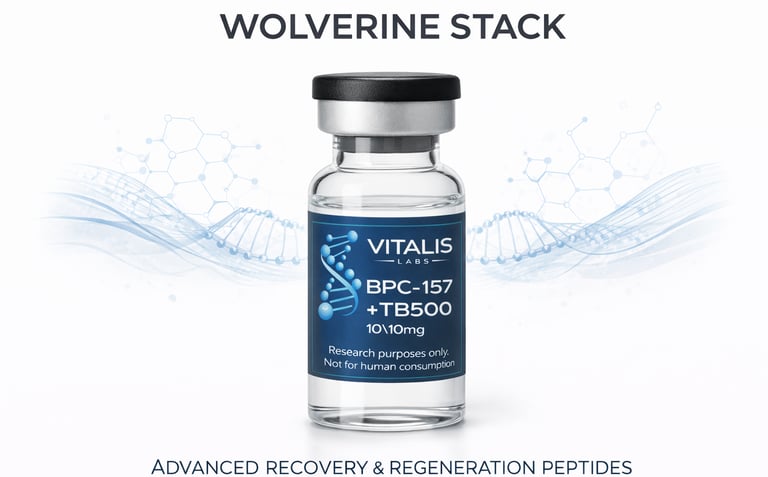
The “Wolverine Stack”: Mechanisms, Potential Benefits, and Clinical Considerations
The “Wolverine Stack” is a popular term in performance and bio-optimization communities used to describe the combined use of two investigational peptides:
BPC-157
TB-500
The nickname references the Marvel character Wolverine, known for rapid healing and regeneration. Advocates claim this peptide combination may support accelerated tissue repair, reduced inflammation, and enhanced recovery.
However, while interest in the Wolverine Stack continues to grow, it is important to understand the scientific mechanisms, current evidence, and regulatory status of these compounds.
What Is the Wolverine Stack?
The Wolverine Stack refers to the combined use of BPC-157 and TB-500, two synthetic peptides that are being studied for their potential regenerative and healing properties.
Neither peptide is currently FDA-approved for general medical use, and both remain investigational compounds.
The rationale behind stacking them lies in their potentially complementary mechanisms:
BPC-157: Primarily studied for tissue repair and angiogenesis support
TB-500: Studied for cellular migration, actin regulation, and wound healing
Together, proponents suggest they may enhance recovery in musculoskeletal injuries.
Mechanism of Action
BPC-157: Tissue Repair and Angiogenesis
BPC-157 (Body Protection Compound-157) is derived from a protective gastric protein fragment.
Preclinical research suggests it may:
Promote angiogenesis (formation of new blood vessels)
Increase fibroblast activity
Enhance collagen deposition
Modulate nitric oxide pathways
Reduce inflammatory cytokine expression
Animal studies have examined its effects on tendon, ligament, muscle, nerve, and gastrointestinal tissue repair.
Its proposed mechanism centers on enhancing local healing cascades and improving blood supply to damaged tissue.
TB-500: Cellular Migration and Cytoskeletal Regulation
TB-500 is a synthetic fragment of thymosin beta-4, a naturally occurring peptide involved in actin binding.
Actin is a key structural protein that supports:
Cell movement
Tissue remodeling
Wound healing
TB-500 has been studied for its potential to:
Promote cell migration to injury sites
Accelerate wound closure
Support muscle fiber repair
Reduce inflammation
By influencing cytoskeletal organization, TB-500 may facilitate tissue regeneration processes.
Why Are They Combined?
The theoretical synergy behind the Wolverine Stack is based on complementary actions:
BPC-157TB-500Promotes angiogenesisEnhances cellular migrationSupports collagen formationRegulates actin and tissue remodelingModulates inflammationAssists in wound repair
The combination is believed by proponents to potentially:
Enhance musculoskeletal recovery
Improve tendon and ligament healing
Reduce downtime from injury
Support post-surgical recovery
However, these claims are largely based on preclinical data and anecdotal reports rather than large-scale human trials.
Current Evidence: What Does Research Say?
Most research on BPC-157 and TB-500 has been conducted in:
Rodent models
In vitro (cell culture) studies
Findings suggest potential benefits in:
Tendon-to-bone healing
Muscle regeneration
Nerve recovery
Wound closure acceleration
However, there is a lack of:
Large randomized controlled trials in humans
Long-term safety data
Standardized dosing protocols
FDA approval for therapeutic use
Because of this, the scientific community considers these peptides investigational.
Why Is the Wolverine Stack Gaining Popularity?
Several factors contribute to its rise:
1. Growing Interest in Regenerative Medicine
There is increasing demand for non-surgical recovery options in sports medicine and orthopedics.
2. Bio-Optimization Culture
Athletes and high-performance individuals are exploring advanced recovery modalities beyond traditional therapies.
3. Social Media Exposure
Online forums and influencers have amplified anecdotal recovery stories, fueling curiosity and demand.
4. Dissatisfaction With Slow Healing Timelines
Chronic tendon injuries and ligament damage can take months to heal. The idea of accelerated recovery is highly appealing.
How Does It Compare to Traditional Treatments?
Conventional approaches to musculoskeletal injuries include:
Physical therapy
NSAIDs
Platelet-rich plasma (PRP)
Corticosteroid injections
Surgical intervention (when necessary)
Unlike approved therapies, the Wolverine Stack lacks robust clinical validation.
While early laboratory findings are intriguing, it has not yet reached evidence levels required for mainstream medical integration.
The Future of Regenerative Peptide Therapy
Peptide research continues to expand in:
Orthopedics
Wound care
Neurology
Gastrointestinal repair
Cardiovascular regeneration
If future clinical trials validate safety and efficacy, regenerative peptides could become a formal part of therapeutic protocols.
Until then, they remain within experimental and research domains.
Conclusion
The Wolverine Stack — combining BPC-157 and TB-500 — represents a growing trend in experimental regenerative peptide use. Preclinical data suggest possible benefits in tissue repair, angiogenesis, and cellular migration.
However, robust human clinical trials are still lacking, and neither compound is currently FDA-approved for therapeutic use.
While the concept of accelerated healing is compelling, individuals should approach investigational peptides with caution and prioritize evidence-based medical guidance.
As regenerative medicine evolves, future research will determine whether peptide stacks like this move from biohacking circles into validated clinical practice.